
India economic growth 2025
Introduction
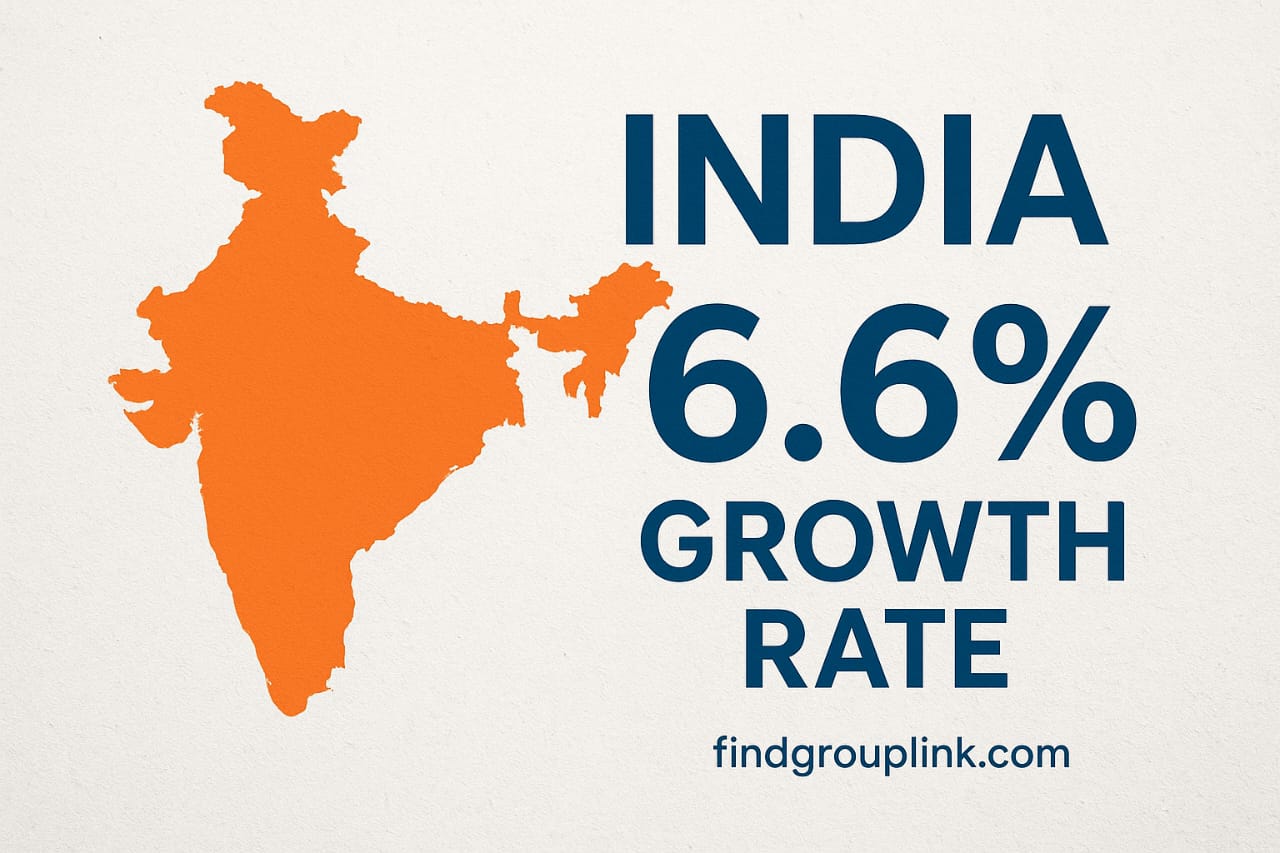
India’s economy is once again in the global spotlight. The International Monetary Fund (IMF) has projected a 6.6% GDP growth rate for FY2025–26, reaffirming India’s position as the world’s fastest-growing major economy.
But beyond the headlines and numbers, this forecast carries deeper meaning for two powerful groups shaping the country’s future — marketers and investors.
For marketers, it signals expanding consumer confidence and new audience segments. For investors, it represents both opportunity and caution. The real question is: how can we translate macro-growth into micro-gains?
1. Understanding the 6.6% Growth Forecast
The IMF’s 6.6% projection isn’t just a number — it’s a reflection of India’s structural resilience. Despite global economic headwinds, India’s economy continues to be powered by:
Strong domestic consumption (over 55% of GDP)
Public infrastructure spending under the “Make in India” and “Viksit Bharat 2047” missions
A booming services and digital economy
A rapidly urbanizing middle class
However, this optimism is balanced by certain challenges:
Persistent inflation risks (especially food and energy)
Export slowdowns due to global demand dips
Youth unemployment concerns
And a widening gap between rural and urban consumption
So, while 6.6% growth sounds promising, its distribution and sustainability are what matter most to both brands and investors.
2. The Marketer’s View: A Consumer Revolution in Motion
India’s marketing landscape is evolving faster than ever. With a growing digital population — over 900 million internet users by 2025 — consumer behavior is transforming across every category.
Here’s what 6.6% growth really means for marketers:
a. Rise of Tier-2 and Tier-3 Markets
Economic growth is no longer an urban story alone. Smaller cities like Indore, Surat, Lucknow, and Coimbatore are leading in digital adoption and spending power.
Marketers must design hyper-local campaigns, using regional languages and localized influencer networks to connect authentically.
b. The Shift Toward Value and Trust
Post-pandemic consumers are smarter and more skeptical. They want value, credibility, and convenience, not just flashy ads.
Brands that demonstrate authenticity and financial responsibility — like transparent pricing or EMI options — win loyalty.
c. Digital Acceleration and AI-Driven Personalization
With AI tools like ChatGPT, Google Gemini, and Meta Advantage+, marketing is becoming data-driven and predictive.
AI helps brands segment audiences by income, spending habits, and financial behavior — directly linking marketing strategy with financial data.
💡 Pro Tip: Marketers who understand consumer finance can better position products for emotional and rational appeal — the perfect blend for 2025 success.
3. The Investor’s View: Riding the Growth Wave Wisely
For investors, India’s 6.6% growth represents opportunity — but not without risk.
a. Equity Market Outlook
Indian stock markets have already priced in optimism, with the Nifty 50 and Sensex touching record highs in mid-2025. But valuation levels remain elevated.
Investors must focus on earnings growth, not just sentiment.
High-potential sectors:
Infrastructure & Construction (government capex focus)
Renewable Energy (India’s green transition is policy-backed)
Financial Services & Fintech (financial inclusion + digital lending)
FMCG & Retail (rural recovery and festive demand)
b. Long-Term Themes to Watch
India’s Demographic Dividend – Young population = long-term consumption boom.
- Digital Transformation – From UPI to AI, India is leapfrogging legacy systems.
- Green Economy – Carbon neutrality goals open multi-billion-dollar investment lanes.
c. Risks to Consider
Inflation and interest rate volatility
Global recessionary pressures
Geopolitical risks (energy prices, trade tensions)
Smart investors are now diversifying portfolios — combining domestic equities, government bonds, and foreign ETFs to balance risk.
4. When Finance Meets Marketing: The New Convergence
In the past, finance and marketing operated in silos. Today, that separation no longer exists. Economic data influences brand strategy, and consumer trends influence market performance.
a. Spending Power = Marketing Fuel
As GDP rises, so does disposable income.
That means brands can expect higher conversion rates, but also more competition for attention.
Every percentage point of GDP growth translates into billions of dollars in potential spending — a goldmine for companies that can emotionally and financially connect with consumers.
b. Financial Data = Marketing Intelligence
Modern marketing tools rely on financial metrics — purchase frequency, average order value (AOV), and credit usage — to forecast consumer intent.
The smartest brands now integrate financial analytics into marketing dashboards.
c. Investors Read Consumer Signals
Investors, too, watch marketing trends as early indicators of growth. If ad spends are rising in FMCG and e-commerce, that often signals future stock performance.
Hence, marketing data has become a leading indicator for market sentiment.
5. The Festive Factor — Short-Term Boost, Long-Term Insights
India’s festive season in Q4 2025 will act as a real-world test of this growth optimism.
Marketers anticipate record online and offline sales, while investors will track Q3–Q4 earnings to validate the IMF’s projections.
Increased spending during festivals reflects consumer confidence, a vital metric for both marketing campaigns and investment strategies.
Brands focusing on affordable luxury, digital convenience, and financially inclusive offers (like “buy now, pay later”) are expected to dominate.
6. Key Takeaways for 2025
For Marketers:
Embrace data-driven storytelling — numbers and narratives together build trust.
Expand into Tier-2/3 cities where real growth is happening.
Align marketing KPIs with economic indicators (CPI, spending trends, digital payments).
For Investors:
Focus on sectors aligned with domestic demand, not just exports.
Use consumer sentiment as an early investment signal.
Stay flexible: combine value investing with thematic growth strategies.
7. Looking Ahead: The Decade of Financial-Marketing Fusion
India’s 6.6% growth story is more than an IMF statistic — it’s a blueprint for how emerging economies can merge financial intelligence with marketing innovation.
Marketers who think like investors — measuring ROI, forecasting sentiment — will build sustainable brands.
Investors who understand marketing — spotting brand equity early — will find long-term winners.
The future of growth lies at the intersection of consumer emotion and economic logic.
Internal Links:
- Follow Fundmetry.com for more financial updates.
Conclusion
India’s growth dream is not a fantasy; it’s a disciplined journey powered by consumption, creativity, and capital.
If the country sustains even 6%-plus growth through the decade, it will redefine global marketing and investment narratives.
For marketers, this is a call to innovate and localize.
For investors, it’s a reminder to stay rational amid optimism.
And for India — it’s proof that when economics and emotion move together, growth becomes unstoppable.
https://findgrouplink.com/wp-content/uploads/2025/10/WhatsApp-Image-2025-10-22-at-1.17.09-PM-1.jpeg